 In preparation
Jak angażować studentów? Nowoczesne metody nauczania zarządzania
ISBN: 978-83-60694-87-9
eISBN: 978-83-60694-80-0
Scientific editor:
Michał Pienias, PhD


Available in print
Warsaw 2020

Ostap Kushnir
About the book in academic journals:
„Ideology and Politics Journal”
„Політичне життя” (Political Life)

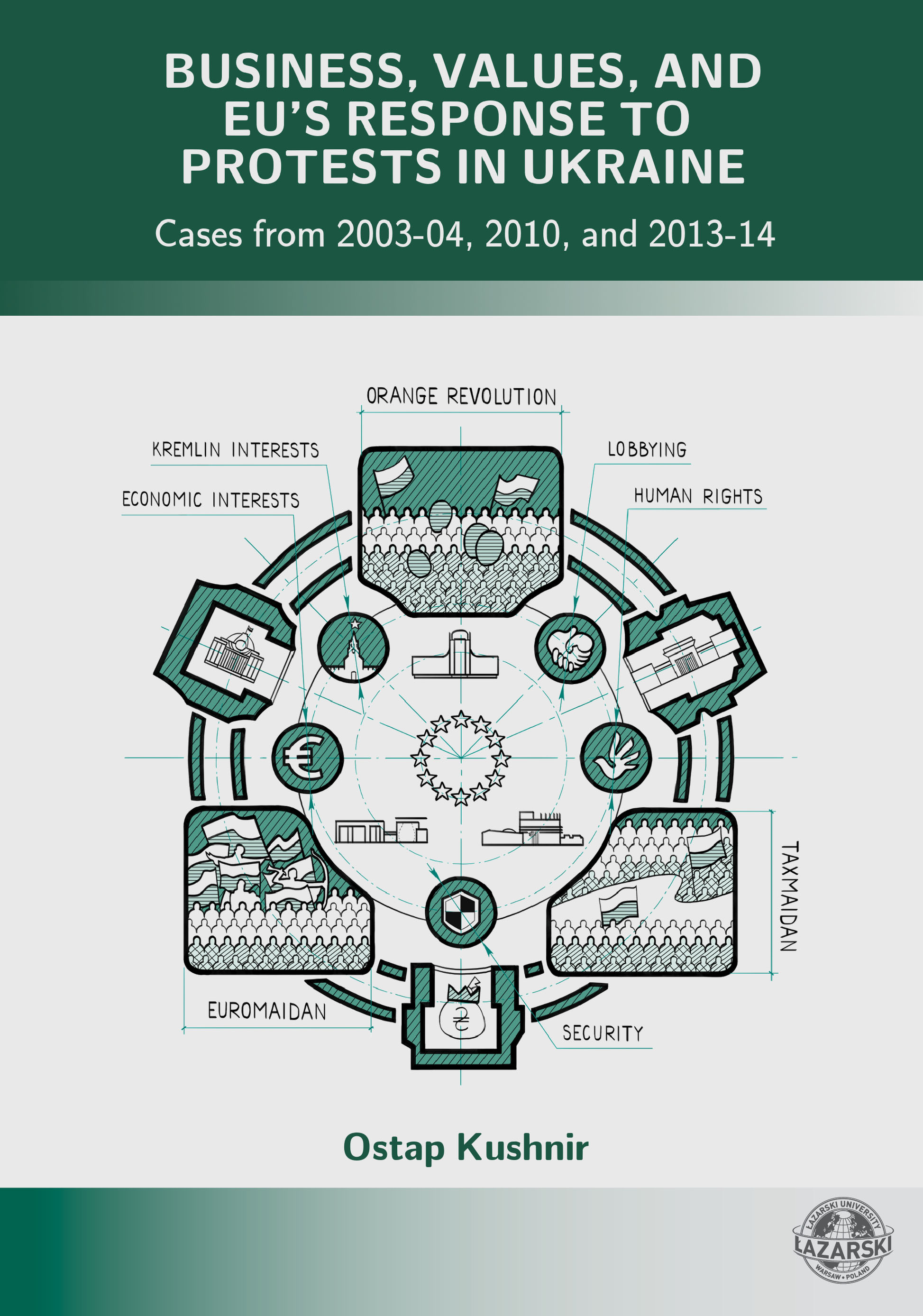
The hypothesis formulated in the introduction is worthy of note. In accordance with it, the infringements of human rights in Ukraine, including in particular the right to freedom of assembly, proved to be a sufficient incentive motivating the European Union’s foreign policy towards Ukraine, despite the fact that the turnabout in this policy clashed with economic interests of Western European entrepreneurs. This hypothesis coordinated the line of the Author’s thought, accentuating the inextricability of politics and economy in the European Union’s international strategy.
According to Kushnir, the importance of Ukraine for the EU stems from two main reasons: its role as a transit state for the Russian gas exported to the EU, and the geopolitical and ideological rivalry with Russia. For these reasons, the EU strives towards democratisation and stabilisation of Ukraine. Human rights, which in the EU’s opinion are the sine qua non for the establishment of a liberal society, play a special role in this context. In most cases it was the violation of human rights in Ukraine that persuaded the EU to become involved in this country.
In preparation
ISBN: 978-83-60694-87-9
eISBN: 978-83-60694-80-0
Scientific editor:
Michał Pienias, PhD
 Open access
ISBN: 978-83-60694-85-5
eISBN: 978-83-60694-86-2
Scientific editors:
Dominika Dzwonkowska, Tomasz Idzikowski
Open access
ISBN: 978-83-60694-81-7
eISBN: 978-83-60694-82-4
Scientific editors:
Włodzimierz Dzierżanowski, Przemysław Szustakiewicz
Open access
ISBN: 978-83-88690-27-3
eISBN: 978-83-88690-47-1
Authors:
Katarzyna Kostur, Tomasz Balcerzak